
Overview
Schedule an OpenShift when you’d like a user to pick up a shift instead of assigning it to a specific person. OpenShifts are a good fit when:
- You want to give your users the flexibility to pick up shifts that work best for them.
- Your user’s availability is complicated, and letting them pick up shifts themselves saves time for everyone.
Getting started with OpenShifts
The OpenShifts feature allows you to add shifts to the scheduler that users can select to work based on their eligibility.
Schedule OpenShifts
Schedule OpenShifts using shift templates or by creating custom shifts.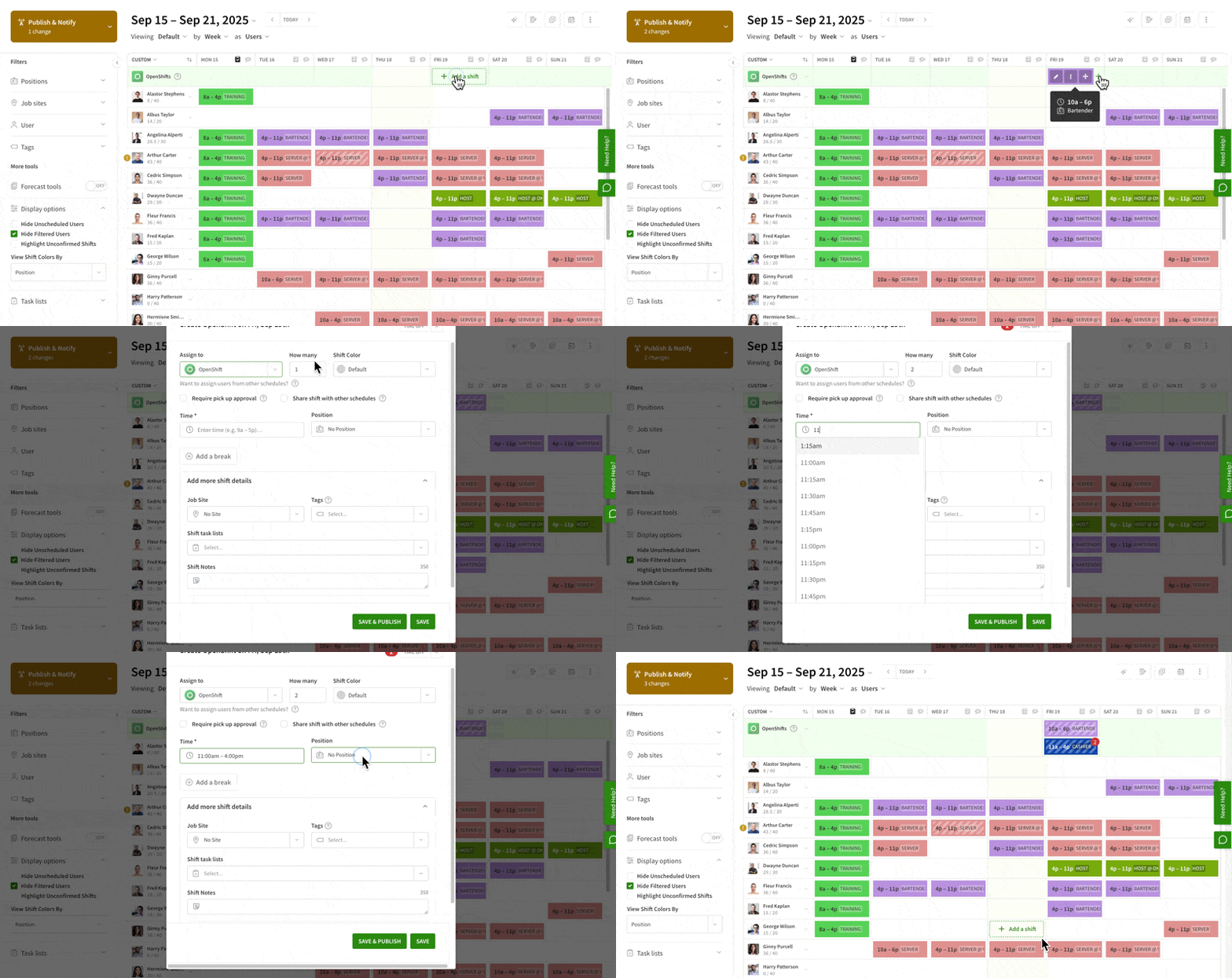
TIP: Collapse the OpenShifts row when there are at least 4 shifts scheduled in a day for a simplified view of the scheduler.
Create OpenShifts on the go with the Android and iOS apps.
Publish OpenShifts
Publish the OpenShifts so qualified and eligible users can pick up shifts. You can also publish OpenShifts from the Android and iOS apps.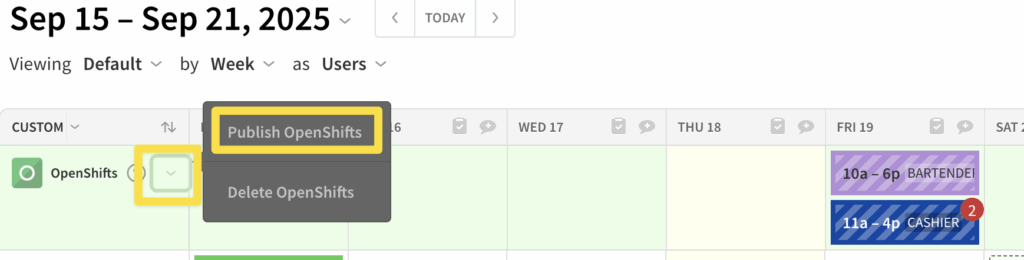
Once published, eligible users are notified based via email or on their mobile devices depending on their alert preferences. 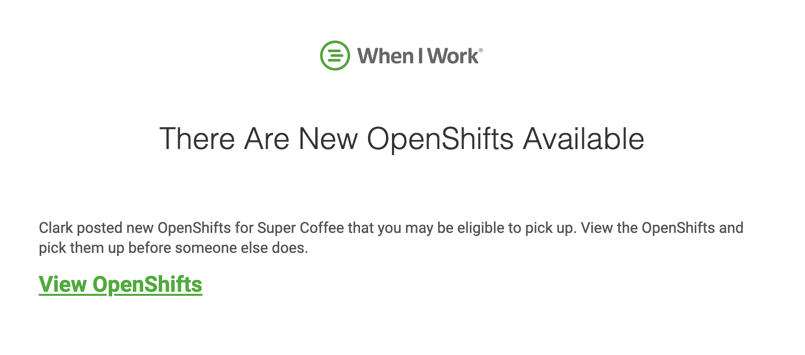

Who can take OpenShifts?
A user is eligible to pick up a shift if they meet the following criteria:
- They are qualified for the shift based on their assigned positions and tags.
- They are not already scheduled for a published shift.
- They are not scheduled for approved time off.
- They are not hidden in the scheduler.
When the OpenShift criteria is defined, you can view all users who are eligible to pick up the shift.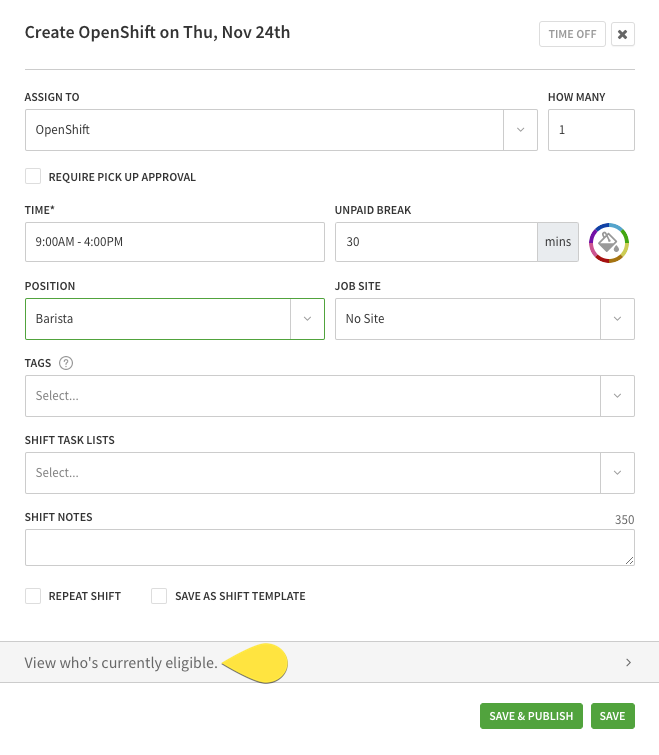
Offer OpenShifts to specific users
Click View who’s currently eligible to select which users can pick up the OpenShift.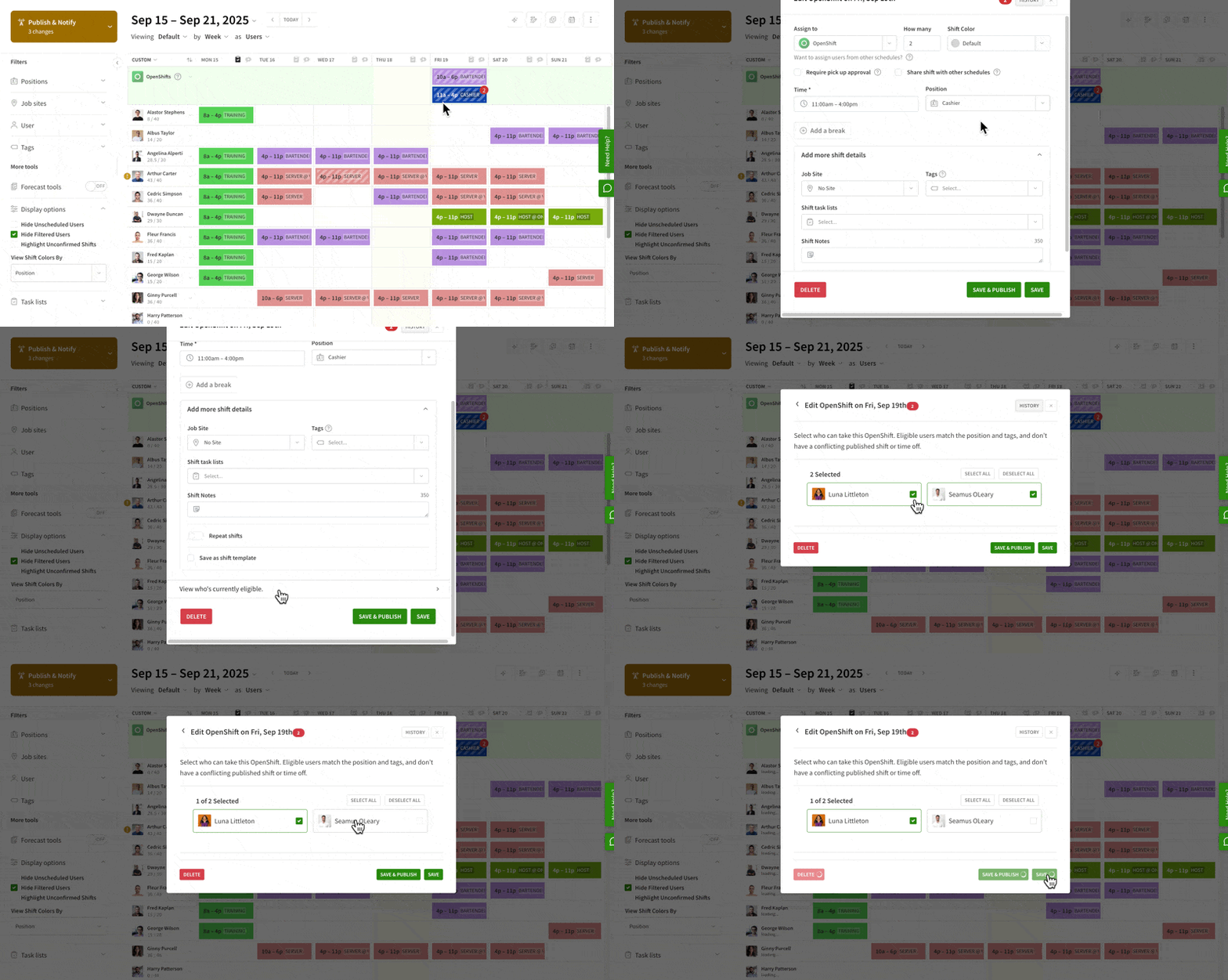
Taking OpenShifts
After publishing the OpenShift, users are notified and the first user to view and accept the OpenShift gets it automatically. Users can pick up OpenShifts from the web app or the Android and iOS apps.
OpenShift Requests
OpenShift Requests, also called Shift Bidding an option within an OpenShift that allows users to express interest in the shift. Management can then view who has requested to pick up the OpenShift and select and approve a user to work the shift.
First, check the box to require pickup approval of the OpenShift: 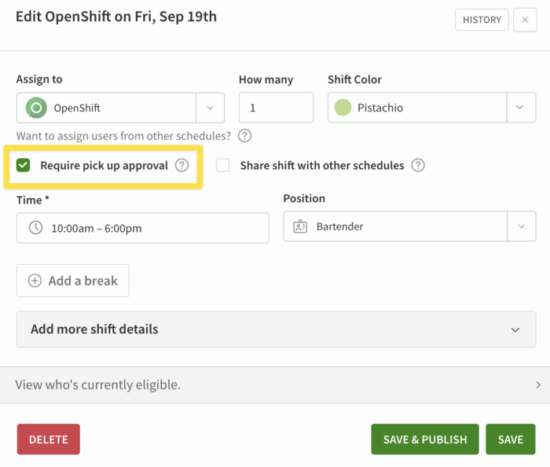
When approval is required, the shift will appear with as a visible indicator: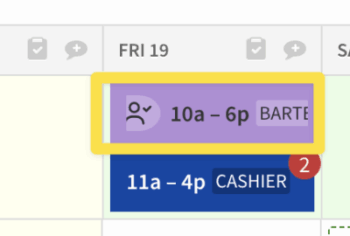
Overlapping OpenShift Coverage
The overlapping OpenShift coverage option allows users to pick up OpenShifts that overlap with currently scheduled shifts. This permits users to double up on shifts that have overlapping times if the user can cover enough of the OpenShift. Overlapping OpenShifts can be used without or with shift bidding (OpenShift pick-up approval) enabled.
Key Points
- Employees see trimmed available OpenShift times relative to their assigned shifts.
- When an admin, manager or supervisor is viewing their personal schedule in the My Schedule section, they see trimmed available OpenShift times. Admins, managers and supervisors can view full shift times on the scheduler.
- Overlapping OpenShifts must take place at the same location as the user’s initial assigned shift to avoid travel time between shifts. The overlapping OpenShift takes place at the same location if the schedule and job site as the initial assigned shift.
- If two separate job sites on the workplace account has the same address or coordinates, this requirement is met and users will be eligible to pick up the OpenShift.
Configuration
The overlapping OpenShift functionality is enabled and configured in Scheduling Settings.
- Hover over , then select Scheduling Settings.
- Switch on the toggle for Shift Coverage.
- Check Allow Overlapping OpenShift Pick-Up.
- Enter the % of the OpenShift a user must be able to work. By default this is set to 75%.

- Enter the % of the OpenShift a user must be able to work. By default this is set to 75%.
- Click Save in the top-right corner.
Who can take overlapping OpenShifts?
Like regular OpenShifts, users need to be eligible to take an overlapping OpenShift. An user is eligible to pick up an overlapping OpenShift if they meet the following criteria:
- They are qualified for the shift based on their assigned positions and tags.
- They are not scheduled for approved time off.
- They are not hidden in the scheduler.
- The OpenShift takes place at the same location as the user’s initial assigned shift.
- The OpenShift does not exceed the user’s max hours.
- The OpenShift does not have scheduling concerns.
- The OpenShift meets the % threshold set for partial OpenShift pick-up in the Scheduling Settings.
Shift history
On the scheduler, management can see when an OpenShift was trimmed at the point it was taken or approved in the shift history. See Shift History for more information on viewing shift history.
